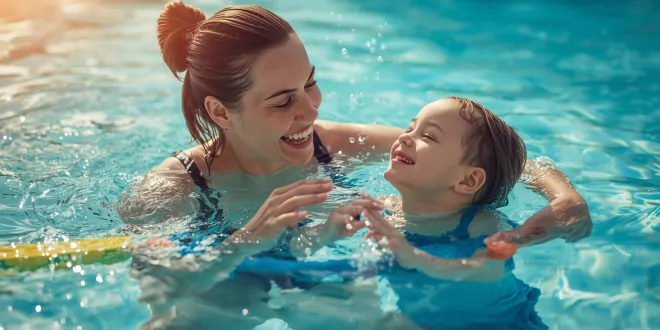
How to Teach Your Child to Swim: Essential Beginner’s Guide
How to teach your child to swim is one of the most valuable life skills you can pass on. This step-by-step guide shows parents how to prepare, build water comfort, and introduce floating in a safe, playful way.
Table of contents
Teaching your child to swim is one of the most valuable skills you can give them. Swimming builds confidence, improves health, and most importantly, provides a layer of safety around water. But many parents feel unsure about where to start. This guide is designed to give you practical, step-by-step methods you can use right away. By the end, you’ll know exactly how to prepare, what to say, and which simple exercises will help your child feel safe and happy in the water.
Why Swimming Matters for Children
Swimming is more than a sport—it’s a life skill. Studies show that swimming lessons significantly reduce the risk of drowning, especially for children under the age of 5. Beyond safety, swimming develops coordination, strengthens the whole body, and gives children a sense of independence. Starting early also helps children overcome fear of water, turning pool time into a source of joy instead of anxiety.
Safety First: Parent Rules Before Lessons Begin
Before teaching your child to swim, establish clear safety rules. These should be repeated before every session until they become second nature. Examples include:
- Never enter the pool without an adult.
- Always walk near the pool, no running.
- If you feel tired, grab the wall or call for help.
Parents must also follow safety habits: stay within arm’s reach (called “touch supervision”), avoid distractions like phones, and choose pools with calm, warm water for beginners. Remember—swimming aids such as floaties or inflatables are not substitutes for supervision.
Preparing for Your First Swim Session
Preparation makes the first lessons smooth and stress-free. Here are the essentials:
- Choose the right pool: A shallow area with warm water helps kids relax. Avoid crowded or noisy pools at first.
- Gather simple gear: Swimsuit, goggles (optional but helpful for comfort), and a kickboard or pool noodle. Skip unnecessary gadgets.
- Keep sessions short: Plan for 20–30 minutes maximum. Children learn best in small doses.
- Set expectations: Tell your child, “Today we’ll play with bubbles and floating,” instead of promising they’ll “learn to swim” in one go.
Building Water Comfort
Many children fear putting their face in the water. The key is to progress slowly and make it playful. Here’s how you can do it:
1. Splash and Play
Start in shallow water. Scoop water with your hands and gently sprinkle it on your child’s shoulders, arms, and cheeks. Let them splash back. This gets them used to the feel of water on their body.
2. Blowing Bubbles
Kneel with your child at the pool’s edge. Say, “Let’s pretend to blow out birthday candles.” Both of you place your lips in the water and exhale slowly. Do this 5–10 times. Turn it into a game: “Who can make the biggest bubble storm?”
3. Face in the Water
Encourage your child to lower their face gradually, starting with just the lips, then the nose, and eventually the eyes. Praise each step. Avoid forcing or pushing their head down—let them control the pace. Toys that float just under the surface can encourage dipping the face naturally.
First Floating Lessons
Floating builds confidence and teaches children they can rest in the water. Start with the back float—it feels safer because the face stays out of the water.
Back Float
Stand behind your child and support them by placing one hand under the shoulders and one under the hips. Say, “Look at the sky, tummy up.” Encourage them to stretch arms and legs wide like a starfish. Gradually reduce your support as they relax. Even 3–5 seconds of floating is a big win at first.
Front Float
Hold your child under the chest and hips while they stretch arms forward. Cue: “Pretend you’re a superhero flying.” Encourage gentle exhaling to stay relaxed. Once comfortable, let go for a second or two, then catch them again.
Ending Every Session on a Positive Note
Children remember how a lesson ends. Always finish with a fun game like “splash the parent” or “high-five the water.” Keep the last memory happy, even if progress was slow. This way, your child looks forward to the next session.
Conclusion
Teaching your child to swim doesn’t have to be overwhelming. By starting with safety, building comfort, and introducing basic floating, you lay a strong foundation for future swimming skills. Keep lessons short, playful, and consistent. Remember: patience and encouragement are your most powerful tools. With this step-by-step approach, your child will grow more confident each time they enter the water, setting the stage for a lifetime of safe, joyful swimming.
FAQs
Many children are ready for basic water lessons around the age of 1–2, focusing on water comfort and safety. Formal stroke instruction usually begins around ages 4–5 when motor skills are more developed. Every child is different, so watch for readiness cues like curiosity about water and ability to follow simple instructions.
Start outside the pool by playing water games such as splashing with hands or blowing bubbles. Move slowly into shallow water, offering choices like ‘Do you want to put lips or nose in today?’ Avoid forcing submersion. Confidence grows when children feel in control of their pace.
Simple tools like kickboards, pool noodles, or goggles can support learning. Avoid relying on arm floaties or inflatables since they promote poor body posture and give a false sense of security. Always prioritize hands-on supervision over equipment.
Most children need several weeks of consistent practice, 2–3 times per week, to master basics like floating, kicking, and blowing bubbles. Progress depends on comfort level, personality, and practice frequency. Celebrate small milestones rather than rushing to complete swimming strokes.
End every session on a positive note with fun games such as ‘splash the parent’ or treasure hunts. Keep sessions short (20–30 minutes) and focus on playful learning. Rewards like stickers, praise, or choosing the next pool toy can make lessons exciting and enjoyable.
Parents can safely introduce water comfort, floating, and basic kicks with close supervision and patience. However, formal lessons with certified instructors are recommended as children advance to strokes. Always combine home practice with safety precautions and professional input when possible.
Yes, toddlers can begin floating with full parent support. Start by holding them under the back and encouraging them to look at the sky. Even 3–5 seconds of relaxed floating with support is a valuable start. Progress slowly and never force the position.
Focus on comfort drills like splashing, pouring water on arms, and blowing bubbles. Use shallow water for floating support and wall kicks. Keep safety rules strict, and avoid deep-water activities until they’re ready for larger pools.
Always end lessons with a fun, successful activity such as a game, splash contest, or high-fives. Ending on a happy memory makes children eager for the next lesson, even if the main skill was challenging.
Always maintain touch supervision, never rely on floaties, establish pool rules before lessons, and keep distractions like phones away. Ensure your child knows how to grab the wall and rest when tired. Reinforce safety rules consistently at every session.