Napping for Energy: Power Nap Benefits for Health & Productivity
Napping is more than a quick escape from your busy day. Strategic napping can restore energy, sharpen focus, and even lower stress hormones while boosting long-term heart and brain health.
Why Napping Matters
Napping is more than a quick escape from your busy day. Strategic napping can restore energy, sharpen focus, and even lower stress hormones. When used well, brief daytime sleep slots into a healthy schedule without replacing nighttime rest. Throughout this article we will explore nap benefits for adults, power nap benefits, the best time to take a nap, and other science-backed insights that make napping a practical wellness tool.
Nap Benefits for Adults
The phrase nap benefits for adults covers a wide range of gains. Studies show that adults who nap strategically experience lower blood pressure, steadier moods, and faster reaction times. Those nap benefits for adults also include a measurable drop in cortisol—the body’s stress hormone—after as little as 20 minutes of shut-eye. Older adults benefit too; research links nap benefits for adults over 60 with improved balance and a reduced risk of falls because the brain recalibrates motor control during light sleep.
Importantly, these perks arise from regular yet moderate napping. When adults pair planned naps with good nighttime habits, energy rebounds, decision-making sharpens, and motivation stays intact. That makes the humble nap a low-cost, drug-free way to fortify everyday health.
Napping vs Sleeping: Key Differences
People often pit napping vs sleeping, but they play different roles. Nighttime sleep cycles through deep and REM stages that reset metabolism, repair tissue, and consolidate memory. In the napping vs sleeping debate, daytime rests are shorter and usually stay in lighter stages of non-REM. That means you wake faster and gain a burst of alertness without drifting into slow-wave sleep—the grogginess culprit. Appreciating the gap between napping vs sleeping keeps each tool in its proper context: one restores your 24-hour clock, the other acts like a quick software patch when your battery dips.
This distinction also explains why napping is easier to squeeze into work breaks, commutes, or lunch hours, while a full night’s sleep remains irreplaceable for long-term health and hormone balance.
Power Nap vs. Long Nap
All naps are not created equal. A “power nap” is usually 10-30 minutes, whereas a long nap can stretch beyond 60 minutes and push into deep sleep. Understanding which one you need—and when—prevents post-nap grogginess and optimizes recovery.
Power Nap Benefits
The body of evidence on power nap benefits is compelling. A 20 minute snooze increases alertness scores by up to 34 percent in air-traffic controllers, soldiers, and medical residents—three groups that live on the edge of fatigue. Those power nap benefits extend to hormone balance: growth hormone and leptin spike, while inflammatory markers dip. Employers notice too; corporate wellness programs cite power nap benefits such as fewer mistakes and shorter afternoon stand-ups, proving that even hectic offices can foster healthy napping.
For anyone chasing the best nap duration for energy, science lands squarely on 20 minutes. So-called “20 minute nap benefits” combine swift neurological refresh with minimal wake-up fog, making them ideal for a lunch-break reset.
How Long Should a Nap Be?
“How long should a nap be?” remains the top sleep-coach question. Research points to three sweet spots:
| Duration | Primary Benefit | Ideal Use-Case |
|---|---|---|
| 10-20 min | Sharper focus, better mood | Workdays, study sessions |
| 30-45 min | Cardio recovery, creativity boost | Athletes, designers |
| 90 min (full cycle) | Muscle repair, memory coding | Shift workers, new parents |
A question arises: why do I feel worse after a nap that exceeds 45 minutes? The answer is sleep inertia—the groggy state that follows waking from deep slow-wave sleep. Keeping naps within the first two rows of the table prevents that fog and delivers a rapid return to action.
Best Time to Nap for Productivity
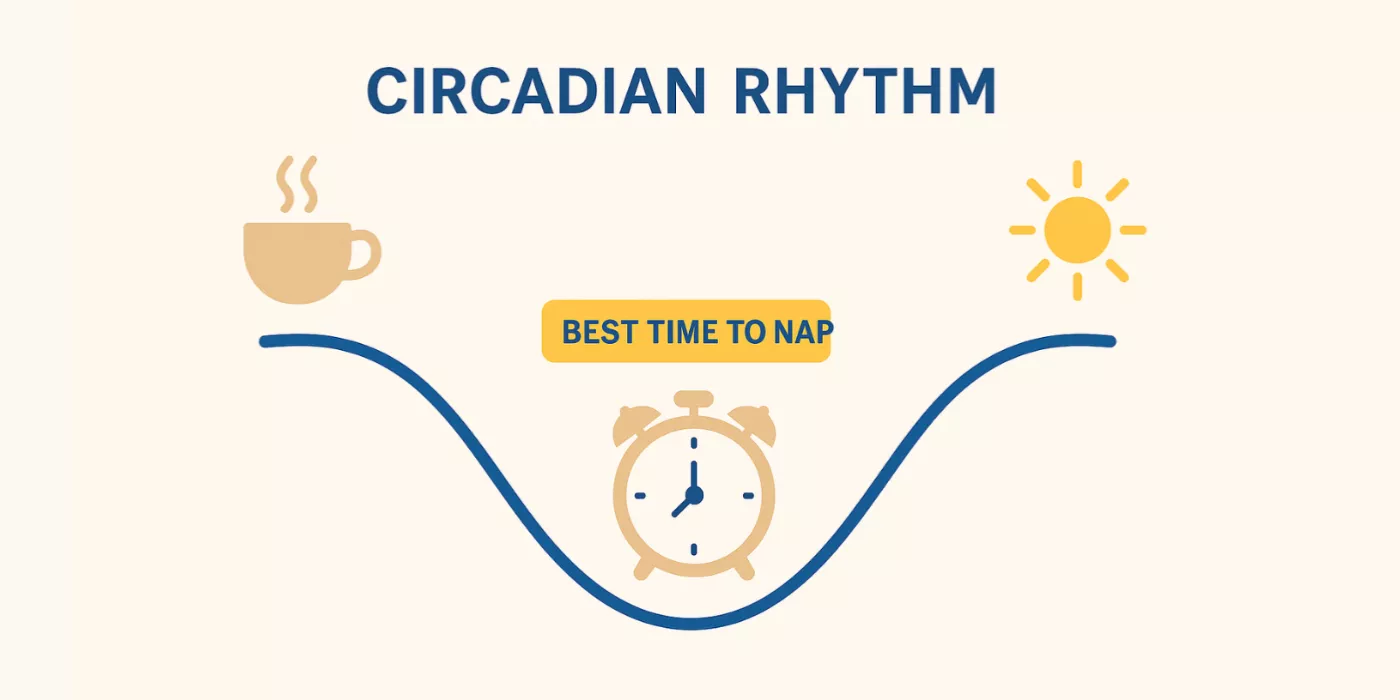
Chronobiology reveals a circadian dip roughly 12 hours after the midpoint of your nighttime sleep. For most adults sleeping 23:00-07:00, the slump hits around 14:00. Harnessing this window offers the best time to take a nap because core body temperature, blood pressure, and reaction speed naturally drop. Aligning your rest with that trough prevents a second energy valley later in the day.
Best Time to Take a Nap
When coaches and physicians talk about the best time to take a nap, they cite what is often called the “post-lunch dip”—even if you skipped lunch. Scheduling a nap between 13:00-15:00 matches your biological rhythm, shortens sleep latency, and safeguards nighttime rest. Missing this window can steal slow-wave time from your main sleep when you finally head to bed. If travel or shift work distorts your schedule, aim for a point eight hours after waking; that rule of thumb usually lands on the adjusted best time to take a nap and keeps your sleep drive in balance.
Napping and Productivity
Mounting evidence ties napping and productivity together. Call-center agents who took 15-minute naps logged 28 percent more sales calls per shift. Programmers cutting bugs by half after an early-afternoon snooze underscore the link between napping and productivity. Employers curious about the benefits of napping at work often install nap pods because the ROI is tangible: sharper memory, fewer errors, and better morale. Without strategic napping, caffeine fatigue builds, decision quality drops, and a costly mistake is just one keystroke away.
Napping and Brain Health
The brain loves a well-timed nap. Light sleep clears adenosine, the chemical that creates fatigue, while spindles in stage-2 sleep knit new knowledge onto existing networks. That synergy feeds creativity, retention, and long-term neurological resilience.
Naps and Memory Improvement
Research on naps and memory improvement shows 20-30 minutes of stage-2 sleep can raise word-pair recall by 25 percent. In older adults, habitual nappers score higher on orientation and verbal fluency tests, linking naps and memory improvement to healthy cognitive aging. Formal education benefits too; students taking short afternoon rests before evening study sessions display stronger math retention, again underscoring the synergy between naps and memory improvement.
Naps and Mental Health
The relationship between naps and mental health is dual-action: naps curb acute stress while long-term habits guard against burnout. Cancer caregivers practicing 20 minute naps reported lower anxiety and higher life satisfaction, demonstrating the emotional buffer provided by naps and mental health strategies. Neuroimaging studies further reveal reduced amygdala reactivity after daytime sleep, indicating a calmer overall threat response and cementing the bond between naps and mental health.
Napping and Heart Health
Less publicized but equally promising is the link between napping and heart health. A Swiss cohort study of 3,462 participants found habitual nappers had a 48 percent lower risk of cardiovascular events. Scientists attribute this to blood-pressure drops during light sleep and reduced inflammatory cytokines, both pivotal mechanisms connecting napping and heart health. Busy professionals who fit in two or three 20 minute rests each week still reaped substantial napping and heart health benefits, easing the path for people with packed calendars.
Common Misconceptions About Naps
Despite overwhelming evidence, myths persist. Some claim naps wreck nighttime sleep; others fear they signal laziness. Let’s bust these myths and highlight the potential disadvantages of napping when done incorrectly.
- Myth 1: “Naps are only for kids.” — Reality: Adults gain substantial cognitive and cardiovascular upsides, proving the phrase disadvantages of napping is context-dependent.
- Myth 2: “Napping means you are lazy.” — Reality: Elite athletes schedule naps as rigorously as workouts because ignoring fatigue is risky and one of the biggest disadvantages of napping ignorance can trigger.
- Myth 3: “Naps make nights sleepless.” — Reality: Timing is key. A late-evening nap is one of the true disadvantages of napping; but early-afternoon naps protect, not harm, nightly rest.
How to Nap Without Feeling Groggy
The most common complaint—“why do I feel worse after a nap?”—usually stems from overshooting the 45-minute mark or waking mid-cycle. To avoid inertia, set an alarm for 25-30 minutes, dim lights, and use a light blanket to cancel chills that jolt you awake. Pair caffeine with your nap (the “nappuccino” trick): sip a small coffee, nap 20 minutes, then wake as the caffeine peaks. This simple protocol erases the sluggish fog and keeps napping enjoyable.
Should You Nap Every Day?
People often ask, “should I nap every day?” The answer is personal. People with intense mental or physical workloads may thrive on daily naps. Others may reserve naps for high-effort days. Use a seven-day experiment: note energy at 10:00, 14:00, and 18:00. If scores improve during a daily-nap week, that suggests you should nap every day. If not, try alternate days. The flexibility ensures should I nap every day becomes an empowering question, not a rigid rule.
Final Tips for Better Naps
Below is a quick checklist to integrate everything we have covered:
- Schedule: 13:00-15:00 remains the best time to take a nap for most.
- Duration: Target 20 minutes to capture power nap benefits and the best nap duration for energy.
- Environment: Dark, quiet, and cool promotes easy sleep onset.
- Consistency: A steady pattern prevents the true disadvantages of napping like circadian drift.
- Hydrate: A glass of water on waking eases the “why do I feel worse after a nap” complaint.
By weaving structured napping into your routine, you unlock a low-tech, high-impact health lever. Whether you seek nap benefits for adults, improved focus, or enhanced napping and heart health, a well-timed snooze can be the simplest upgrade to your day.
FAQs
Research shows that a 20-minute power nap delivers the best nap duration for energy. It offers a quick boost in alertness and mood without drifting into slow-wave sleep, which reduces post-nap grogginess.
Feeling worse after a nap usually means you slept more than 45 minutes and woke in deep sleep. Set an alarm for 20–30 minutes and rise slowly, with light stretching or a glass of water, to avoid sleep inertia.
Daily napping can be healthy if you keep naps short and schedule them early in the afternoon. Regular, well-timed naps help manage stress and support heart health without hurting nighttime sleep.
Napping involves lighter, stage-2 non-REM sleep and lasts up to 30 minutes, while nighttime sleep cycles through non-REM and REM stages for full body repair, hormone regulation, and memory consolidation.
Short naps reduce blood pressure and dampen inflammatory markers. Cohort studies link habitual napping to a lower risk of cardiovascular events, making napping a simple heart-health strategy.
Yes. A 20-minute power nap clears adenosine—the fatigue chemical—at its source, providing a cleaner alertness boost than caffeine. Combine both (“nappuccino”) for an even stronger effect.
The best time to take a nap is between 1 p.m. and 3 p.m., when your circadian rhythm naturally dips. Napping during this window maximizes mental clarity without disturbing nighttime sleep.
Long daytime naps (>60 min) can cause grogginess, disrupt nighttime sleep, and, if frequent, may signal underlying sleep disorders. Keep naps brief and consistent to avoid these disadvantages.
Stage-2 sleep spindles during a short nap help the hippocampus reinforce new information. Studies show a 25 % increase in recall for students who nap versus those who stay awake.
Workplace naps cut errors, boost reaction speed, and improve mood. Employers report higher productivity and lower burnout in teams that use scheduled nap pods or quiet rooms.